
If you are facing a domestic violence charge in Deschutes County and you know people have already talked to police, it can feel like your case is over before it starts. Maybe the alleged victim gave a statement, a neighbor called 911, or officers wrote things in their report that you do not agree with. It is natural to worry that once those words are in writing or on a recording, there is nothing you can do to change what happens next.
In reality, domestic violence cases in Deschutes County turn on more than just what someone wrote in a report or said in a moment of stress. Courts look at how those statements were made, how consistent they are, and whether they make sense when compared with other evidence. Understanding how witnesses actually work in these cases helps you see where there is room for a real defense instead of assuming the worst. At Ward Grover & Thomas, our attorneys have more than 50 years of combined criminal defense experience in Oregon courts, including many assault and domestic violence cases in Deschutes County. We spend a large part of our time reviewing witness statements, 911 recordings, and police reports, then testing those accounts through investigation and cross examination. In this guide, we will walk through how witnesses can shape a domestic violence trial in Deschutes County and the strategies we use to challenge and counter that testimony.
Call (541) 312-5150 today to setup a consultation, or contact us online to learn more.
Why Witnesses Matter So Much in Deschutes County Domestic Violence Cases
Most domestic violence cases in Deschutes County are built around what people say happened, not just around physical evidence. Many alleged incidents take place inside a home, with no cameras and no neutral bystanders watching. When police respond, they often arrive after the fact, so they rely heavily on statements from the people involved and anyone nearby. Those accounts often drive charging decisions by the Deschutes County District Attorney and later become the backbone of the case at trial.
Witnesses in these cases are not limited to the alleged victim. The witness list can include neighbors, roommates, children, 911 dispatchers through call recordings, and responding officers. Each of these witnesses brings a different perspective and a different level of reliability. For example, a neighbor may only hear raised voices, while an officer may only see the aftermath. Recognizing who actually saw or heard what, and who is reporting second hand information, is critical for any defense strategy.
Judges and juries in Deschutes County are instructed to think carefully about how much weight to give each witness. They look at whether the story has stayed consistent over time, whether the person had a clear chance to see or hear what they claim, and whether they might have a reason to exaggerate or downplay events. At Ward Grover & Thomas, we have seen many cases where the state’s case looked strong on paper, but careful attention to these credibility issues changed how the jury viewed the witnesses and the allegations.
Types of Domestic Violence Witnesses the Court May Hear From
When people think about witnesses in a domestic violence case, they usually picture only the alleged victim on the stand. In Deschutes County, the court may hear from a range of witnesses, and it is important to know who they are and how their testimony is usually used. This helps you understand where the prosecution may think its case is strong and where there may be weaknesses to explore. The alleged victim is often the central witness, especially if they claim to have been directly harmed. Their statements can come in several forms, including what they say to the 911 operator, what they tell officers at the scene, what they write in a signed statement, and what they later say in court. Each of these versions of the story can be compared against the others. Even small differences in timing, location, or the sequence of events can matter when a jury considers credibility.
Third party civilians can also play a big role. Neighbors or roommates might testify that they heard yelling, saw someone leave the home, or noticed injuries afterwards. Children may be called to describe what they remember. These witnesses often only see part of the picture, or they may be repeating what an adult told them. In legal terms, that can raise questions about hearsay, which involves repeating out of court statements, and about how much weight the court should give second hand information.
Police officers and sometimes medical staff are another category of witnesses. Officers in Deschutes County commonly testify about what they saw when they arrived, what each person said, and what the scene looked like. Medical personnel may describe injuries and whether they appear consistent with the alleged cause. Because juries tend to view officers and medical staff as neutral, their testimony can be powerful, but it is still subject to challenge. At Ward Grover & Thomas, we frequently compare officer reports with body camera footage or other recordings to see whether their in court testimony matches what was actually said and done at the time.
How Judges and Juries Evaluate Witness Credibility in Deschutes County
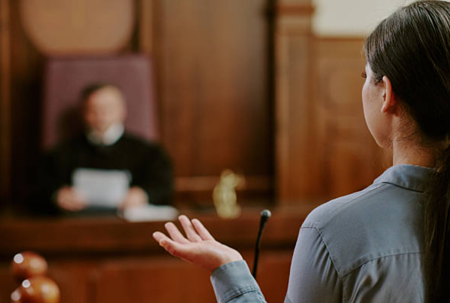
Credibility is the heart of any domestic violence trial. Judges in Deschutes County generally instruct jurors that they must decide which witnesses to believe, how much of their testimony to accept, and which parts to reject. Jurors are told to consider whether a witness seems honest, whether they might be mistaken, and whether they have a reason to shade the truth. This is where the details of a person’s story, and how that story has changed over time, become extremely important.
Several common factors shape credibility. Jurors look at whether a witness has been consistent, or whether their version of events has grown or shifted between the 911 call, the police interview, and trial testimony. They consider whether the witness had a clear opportunity to observe what they are describing. For example, a neighbor claiming to have seen a physical act through a small window at night may be less reliable than someone who was in the room. Jurors also weigh whether the witness was drinking, using drugs, or under extreme stress at the time, which can affect memory.
Bias and motive are also key. In domestic cases, there may be ongoing family law disputes, immigration concerns, financial dependence, or anger about infidelity or control of property. These pressures can influence how someone describes an event or whether they decide to call police at all. A good defense lawyer does not attack a witness as a person, but instead carefully explores whether any of these motives may be affecting what they say. This kind of questioning can help jurors understand why a person might exaggerate, minimize, or selectively recall certain details. In legal terms, using prior statements to challenge a witness’s story is called impeachment. If a witness told officers one thing on the night of the incident and then adds new details or changes their account in court, we can often confront them with that earlier statement. At Ward Grover & Thomas, we rely heavily on this tool. We carefully review written statements, 911 recordings, and body camera footage to identify prior inconsistent statements and then use those differences to show the jury that the testimony they are hearing may not be entirely reliable.
What Happens When an Alleged Victim Recants or Refuses to Testify
One of the most common questions we hear in Deschutes County domestic violence cases is, “If the alleged victim wants to drop the charges, does the case go away?” Many people assume the answer is yes. In practice, that is not how the system works. The prosecutor, not the alleged victim, decides whether to move forward with a case, and prosecutors in domestic violence matters often try to continue even when the complaining witness changes their mind.
Sometimes an alleged victim recants, meaning they say that their earlier statement was exaggerated or untrue. Other times they simply stop cooperating or tell the prosecutor they do not want to testify. In those situations, the state may look for other ways to try to prove its case. This can include using recordings of 911 calls, statements captured on officer body cameras, or testimony from neighbors and children about what they saw or heard. The state may also try to introduce the original statement itself under certain hearsay exceptions, depending on the circumstances. When a witness recants or refuses to cooperate, it can both help and complicate the defense. On one hand, a change in story can undermine credibility and create reasonable doubt. On the other hand, prosecutors sometimes argue that the recant is the untrue version and that the original statement was more reliable. A defense lawyer must carefully assess why the story changed, whether anyone is accusing you of pressuring the witness, and what risk there is that earlier statements could still come into evidence.
This is where confrontation rights become critical. In general, the accused has the right to confront, or question, the witnesses against them in court. If the state tries to use out of court statements from a witness who refuses to appear, there may be constitutional arguments to keep those statements out. At Ward Grover & Thomas, we carefully analyze how each statement was taken, whether the witness is available, and whether the state’s plan respects your confrontation rights, then we file appropriate motions where the law supports that challenge.
Defense Strategies for Investigating and Challenging Witness Testimony
Knowing that witnesses matter is one thing. The next question is what your defense team can actually do about harmful statements already made to police or the court. A strong defense in a Deschutes County domestic violence case starts with gathering every piece of information about what witnesses have said and then testing that information for accuracy and fairness. This is not about asking anyone to lie. It is about making sure the court sees the full picture, not just one version of it.
We begin by obtaining discovery, which includes police reports, 911 recordings, body camera footage, photographs, and any written or recorded statements. We compare these materials with each other and with any messages or social media posts that might exist around the time of the incident. We look for time gaps, missing details, and differences in wording that suggest a witness might be mistaken or might have changed their story. Even something as simple as a witness first saying they were in one room and later claiming they were somewhere else can be significant. Independent investigation is just as important. At Ward Grover & Thomas, we work with investigators who can lawfully contact neighbors, roommates, and other potential witnesses to get their accounts. Investigators can visit the scene to see whether a witness could realistically see what they claim through a window or doorway, or whether background noise would have made it hard to hear certain words. These details can be powerful during cross examination, when we show the jury that what sounded certain on paper may not be so solid in real life.
In court, cross examination is the main tool for challenging witness testimony. We prepare line by line, using prior inconsistent statements to highlight changes in the story, exploring any bias or motive to lie, and asking focused questions that make the limitations of a witness’s memory clear. For example, we may ask a neighbor to admit they never actually saw physical contact, only heard shouting. Or we may ask an officer to acknowledge that their report was written hours later from memory, and that their body camera footage does not capture everything they described. Our goal is not to bully witnesses, but to carefully reveal weaknesses so the jury understands there is more than one way to see what happened.
Throughout this process, we stay focused on building an evidence based defense that fits your specific situation. Some cases call for emphasizing inconsistencies. Others call for drawing out context, such as mutual argument, self defense, or intoxication affecting everyone’s perception. Because our entire practice at Ward Grover & Thomas centers on criminal defense and we have handled a wide range of assault and domestic cases, we are able to tailor these strategies instead of relying on a generic script.
Staying Within the Rules When Dealing With Witnesses and No Contact Orders
When you are worried about what witnesses have said, it can be tempting to reach out and try to fix things yourself. In domestic violence cases, that is often the worst move you can make. Courts in Deschutes County frequently issue no contact orders as a condition of release, which can prohibit you from contacting the alleged victim and sometimes other witnesses directly or indirectly. Violating those orders can lead to additional allegations and can harm your credibility in the eyes of the court. Even if there is no formal no contact order, trying to influence what a witness says can quickly cross the line into accusations of witness tampering. That can include urging someone to lie, asking them to avoid service of a subpoena, or pressuring them to refuse to cooperate. Prosecutors take these allegations very seriously, and what you might see as simply “clearing things up” can be portrayed as an attempt to interfere with justice. This can make it much harder to argue later that witness statements are unreliable or unfair.
There is a lawful way to investigate and address witness issues, and that is through your defense team. Your lawyer and any investigators working with the defense are allowed to contact witnesses, within ethical rules, to request interviews and gather information. Witnesses are typically free to decide whether to speak with the defense. In those conversations, we document what is said, confirm details like timelines and vantage points, and look for information that was left out of the police version of events.
At Ward Grover & Thomas, we represent clients from arrest through trial and help them navigate these rules carefully. Early in the case, we review your release conditions with you so you know exactly who you can and cannot contact. If someone reaches out to you, we advise you on how to respond in a way that does not create new problems. This guidance is part of protecting your rights, because avoiding new allegations and keeping your credibility intact can be just as important as what happens with the original witness testimony.
What To Do Now If Witnesses Are Central to Your Case
If you are thinking about the statements already made in your case, you are not alone. In Deschutes County domestic violence prosecutions, witnesses are often the main evidence the state has. That does not mean your case is hopeless. It does mean that your defense needs to be built carefully around what those witnesses said, how they said it, and what the law allows the prosecutor to use at trial.
The most important step you can take is to get experienced legal guidance as early as possible. A lawyer who regularly handles domestic violence cases can explain how witness rules apply to your situation, request and review all discovery, and start identifying inconsistencies or gaps that might not be obvious at first glance. Early involvement also helps protect you from making mistakes, such as contacting a protected witness or making statements to police that can be turned against you later.
When you meet with us at Ward Grover & Thomas, we encourage you to bring any paperwork you have, including police reports, citations, release conditions, and any restraining order or no contact order documents. We will go through them with you, discuss who the key witnesses are likely to be, and outline a plan for investigating and challenging their accounts. With more than 50 years of combined criminal defense experience, focused on cases like yours, we understand how Deschutes County courts treat domestic violence witnesses and what strategies can make a real difference for you.
Talk With a Deschutes County Defense Team About Witness Issues in Your Case
Witnesses play a powerful role in domestic violence trials in Deschutes County, but their statements are not the final word. Careful review of 911 calls, police reports, and in court testimony, combined with targeted investigation and thoughtful cross examination, can expose weaknesses and give the judge or jury a more complete picture of what happened. You do not have to try to manage this alone or guess what you can and cannot do around witnesses and no contact orders.
If witnesses are central to your case, the sooner you get legal advice, the more options you typically have. Our team at Ward Grover & Thomas is prepared to examine the witness issues in your case from every angle and develop a defense strategy that fits your situation and your goals. To talk confidentially about your charges and the role of witnesses, contact us today.